Monday, 5 December 2011

Its not too late!

Is your Restaurant and Hotel Bedrooms ready for those busy Christmas critics.  

Dont worry if your not, its not too late to place your order with Tonrose. Call us today on 01254 239900 to place your order and be ready for the Christmas Rush!

Wednesday, 30 November 2011

Sleep like a baby


Sleep like a baby…

Here at Tonrose, we don’t ‘just’ supply bedding, we’re interested in the science of sleep. The way we see it, if we can work out what helps you nod off, we can improve our products even further to give you the best night’s sleep possible.

We all know how precious sleep is, and when a baby arrives on the scene, slumber for both the parents and the new-born can become more and more elusive!

So what can you do to improve the quantity and quality of the shut-eye you and your new family get? Babies wake in the night for all sorts of reasons. Be assured that you are not alone!  About a quarter of children under five in the UK have sleep problems, in particular: refusing to go to bed or waking in the night, and the two often go together.

As your child grows and develops it's important to sort out any sleep difficulties, because it can put pressure on relationships between you and your partner, and even between you and your child.

There are different sleep strategies, from crying it out at one end of the spectrum to co-sleeping at the other. It all depends on which solution works best for you and your family.

The following tactics can help your baby to sleep well from as early as six weeks. Always remember, whichever approach you take, you must be consistent and stick to it at all times!

·      Give him/her a chance to fall asleep on her own with no fussing or nursing
·     Set a bedtime routine and stick to it!
·     Give her a security object, such as a baby blanket, stuffed animal or soother.
·     Let him/her out. This is suitable once your baby is four or five months old. If she's crying  after you've put her down, go to her, pat him/her gently and tell him/her everything's fine, but that it's now time to go to sleep. Be gentle, but firm. Leave the room. Wait for a set interval, anything from two to five minutes, then check again. Do this repeatedly until he/she falls asleep, extending the time between each visit.


Recommended sleep patterns for babies:-

Age
Night-time Sleep
Daytime Sleep
Total Sleep
1 month
8½
7(3 naps)
15½
3 months
10
5 (3 naps)
15
6 months
11
3¼ (2 naps)
14¼
9 months
11
3 (2 naps)
14
12 months
11¼
2½ (2 naps)
13¾
18 months
11¼
2¼ (1 nap)
13½
2 years
11
2 (1 nap)
13
3 years
10½
1½ (1 nap)
12

Friday, 18 November 2011

Could you be allergic to your bed?


We all see our bed as a place of refuge; a place to relax and recuperate after a hard day’s work. A safe haven of comfort, warmth and security. But is your bed as safe as you think it is?
Research has shown that over 12 million people could be allergic to something rather sinister that lurks in all beds… dust mites. An average bed has over 2 million of these little critters. They feed off your dead skin and set up home in your bedding.
59% of allergy sufferers said that their symptoms were worse in the bedroom. A shocking revelation that illustrates just how rampant these mites are is that your pillow will double in weight over a six month period due to the faeces they produce! A female can produce up to 100 eggs in her 10 week lifespan, taking over your bed in a matter of days.
Chris Kingsford of Tonrose linen advises that pillows should be changed at least once a year and all bedding should be washed once a week at 60°C. He adds, “The thought of these creatures in your bed is rather unpleasant, but there’s no way of preventing them. Buying good quality ben linen means it can be washed time and time again to get rid of the mites. Washing only goes so far though, and we agree with Allergy UK’s advice that bedding should be replaced frequently.” 
So what’ll it be: party in your bed tonight with 2 million mites on the guest list? I’m ordering new pillows as I write…

Monday, 18 July 2011

We have a new look website coming very soon!

Keep your eyes peeled for our brand new website.  It has been designed for easy using and a more interactive web experience.  We'd love to hear your comments.

Thursday, 17 February 2011

Increase in prices of polyester fibre to aggravate problems

Recent increase in prices of polyester fiber by local manufacturers would further aggravate the problems of already ailing textile industry by increasing the cost of production and making textile exports uncompetitive in market, said Wasim Latif, Chairman and Adil Manzoor Elahi Vice Chairman Pakistan Textile Exporters Association (PTEA) here on Tuesday.

In a joint press statement, they said that short supply of polyester staple fiber coupled with its increased prices have hit the value added textile sector hard and the local producers of polyester staple fiber were reportedly planning to further raise its price. Hike of Rs 5 per kg in the polyester fiber will give another blow to the value added sector, which is already reeling due to high cost of production, they revealed.

Elaborating, they said, polyester staple fiber prices were already increasing as a result of Anti Dumping Duty on import of polyester staple fiber in Pakistan and recent increase is also part of that wave. The concept of anti dumping duty under WTO is protection of finished goods industry, however, in the present case, the textile industry is being deprived of cheap raw material by imposing anti dumping duty, they explained. The government should take notice of the polyester fiber manufacturer's cartel attitude and the said duty should be withdrawn, they demanded.

The chairman PTEA said that Pakistan is already facing 30% to 40% shortage of cotton due to floods in the country. Pakistani exporters have no option but to divert their production to alternate raw material of polyester fiber. Elaborating, he said that raw material shortage was on two sides, on the one hand 20% of cotton crop had been washed away in the recent floods while on the other hand demand of polyester fiber was in excess of total manufacturing capacity of the fiber mills, they said.

It was, therefore, imperative that adequate supply of raw material for the textile exporters should be ensured to enable them to meet their export commitments, they said. This could be appropriately done by removing import restrictions and allowing duty free import of polyester fiber to give a breathing space to the crisis ridden textile sector, they concluded.

Elahi was of the view that textile crisis lingering over the last few months. Gas closure has added fuel to the fire and the industry is on the verge of collapse, he added. A number of manufacturing units have already shut down their operations while many others are operating partially, as a result thousands of workers have lost their jobs. The textile sector was generating 70% of foreign exchange few years back which has slumped to 55% now, he said apprehending negative impact of downslide in industrial production, he said, textile sector in the country was already under severe strain due to four days loadshedding of gas. Under these circumstances textile exporters were constrained to stop manufacturing activities. PTEA office bearers said that fair distribution of shortage of gas across the board was imperative and asked the government to remove discrimination in gas loadshedding. They demanded that duty free import of polyester fiber should be allowed to fulfil requirements of raw material of local industry.

Monday, 14 February 2011

12 Ways to save the world!

1   Energy saving LED lamps
Lighting is a large contributor to electricity costs in hospitality.  Replace incandescent or halogen lamps with LED lamps for huge savings.  You can save up to 85% on electricity costs and LED lamps can last up to 45 times longer than standard lamps. 


2   Microfibre E-cloth
Eco cloths reduce the need to use cleaning chemicals - just add water and clean - but they are not suitable for use in food preparation areas.  Using smaller amounts of cleaning products saves money and cuts down on pollution.  And also helps to prevent allergic 
reactions to these products.  
 
3   Ecosure Light a space paint
Light and space uses up to 20% less light energy, meaning lighting can be set to lower levels or switched on for shorter periods.  
 
 
4   Recheable batteries
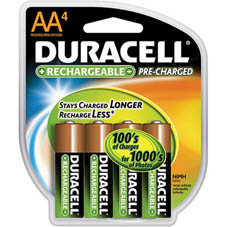
Batteries can be recharged up to 1000 times, saving £1,000s over their life span and lasts up to 40% longer than ordinary nickel-cadmium batteries.  As well as saving significant amounts of money on buying new batteries, using rechargeable ones cuts down on waste disposal.
 
 
5   Switch it off!
You could cut your lighting costs by as much as 15% just by making sure you turn off lights in areas that aren't being used.  These stickers are perfect for back-of-house use.
 
 
6   Smart Meter
The energy meter helps you to understand which appliances use most power so that you can adapt your usage or exchange them for more efficient equivalent.  


7   Dryer Balls
Dryer balls reduce the time needed to dry a load by up to 25% and soften fabrics without the use of chemicals.  They also reduce creases and wrinkles, making ironing easier and cut down on waste fluff.
 
 
8   Recycled Printer Paper
Using recycled paper gives rise to lower environmental impact, such as resource depletion (timber, energy and waste) and pollution.  And double-sided printing reduces waste and saves  money too. 


9   Recycling Bin
Talk to your waste collection contractor about trade waste recycling -  many materials have a market value and the cost of collecting recyclable material can be less than the cost of waste sent to landfill. 


10   Thermostatic radiator value
Giving guests/staff control over the level of heating in their rooms mean that they are less likely to open the window if it is too hot, especially as many people like to sleep in a cooler room.  You can save up to 8% on heating costs by turning the thermostat down by 1%.
 
 
11   Standby saver
Research suggests that leaving electrical equipment on standby can reduce the lifespan by an average of 15% and creates a needless fire risk.  One standby saver installed in a home can save more then £43p,a., so business can save much more. 
 
12   Toiletry dispensers
Only a fraction of individually packaged toiletry products in bathrooms and guest rooms (as little as 15%) are used by guests and the remainder are often thrown away.  Wall mounted dispensers can reduce packaging and product waste significantly. 


Friday, 11 February 2011

How Do I Get The Iron Out My Water? It Is Turning My Towels Yellow.

Generally .5 ppm of iron will stain and discolor white textiles. Chlorine is not a good choice for washing textiles when there is any significant amount of iron present in the water. The best way to wash under the conditions where iron is present is to use oxygen bleaches.  When using commercial laundry equipment, an iron removing sour can strip iron or control the presence depending upon the concentration of the bath, and lower pH value of the water in the bath.

When iron is causing significant textile cleaning and whiteness problems in a laundry operation, I recommend installing a water softening system that utilizes de-iron salt pellets.  A water softener can remove up to .2-.3 ppm of iron. This approach has great benefits for cleaning, whiting, and maintaining tensile strength of the textile fabric over more costly chemical alternatives.